
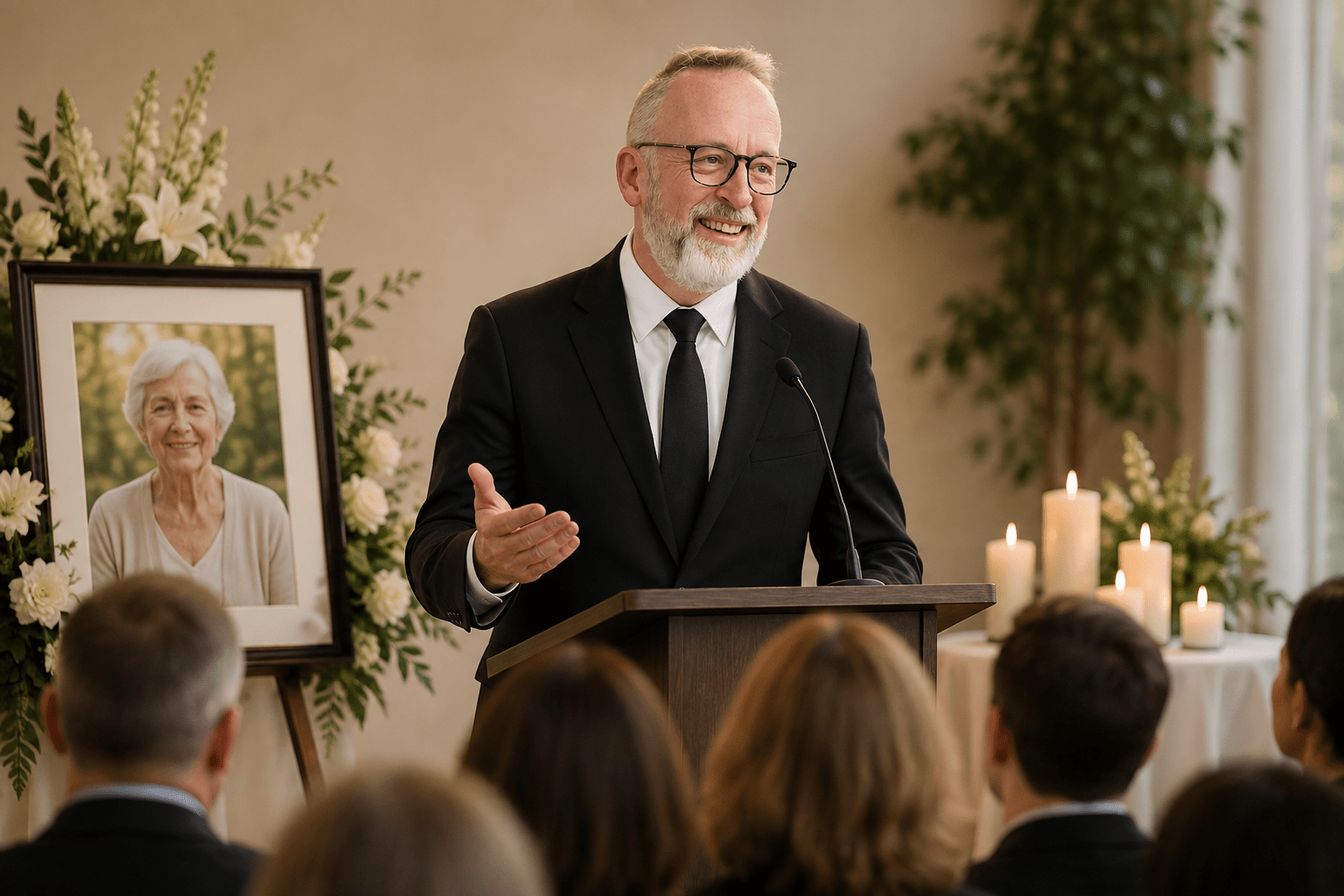
What is a Funeral Celebrant? A Complete Guide to Creating a Meaningful Memorial or Celebration of Life
What Is a Funeral Celebrant? A Complete Guide to Creating a Meaningful Memorial or Celebration of Life
Whether you’re planning a traditional funeral, a celebration of life, or a virtual memorial gathering, one person can make an extraordinary difference in creating a meaningful experience: the funeral celebrant.
Many families have never heard the term until they begin making arrangements after the loss of a loved one. They often ask:
“What is a funeral celebrant, and do we really need one?”
For many families, the answer is yes.
A professional funeral celebrant helps transform a memorial service into a deeply personal tribute that reflects the life, values, personality, and legacy of the individual being remembered. Rather than following a standard script or ceremony, a celebrant works closely with the family to create an experience that is unique, compassionate, and memorable.
Today’s celebrations of life are becoming increasingly personalized. Families are choosing ceremonies in parks, gardens, beaches, funeral homes, community halls, churches, private homes, and online. Many also combine in-person attendance with live streaming so friends and relatives around the world can participate.
A skilled celebrant brings all of these elements together into a cohesive, thoughtful ceremony that allows family and friends to focus on remembrance rather than logistics.
What Is a Funeral Celebrant?
A funeral celebrant is a trained professional who designs and leads personalized funeral services, memorial gatherings, and celebrations of life.
Unlike an officiant who generally follows the traditions of a specific religion or denomination, a celebrant’s primary responsibility is to honour the individual whose life is being celebrated.
They spend time learning about the person, their family, their passions, their accomplishments, their personality, and the memories that made them unique. From these conversations, they develop a ceremony that tells the story of a life well lived.
A celebrant’s role is not simply to speak at the service—it is to guide the family through the planning process, provide reassurance during a difficult time, and ensure the ceremony reflects exactly what the family envisions.
The Type of Ceremony a Funeral Celebrant Can Create
One of the greatest advantages of working with a funeral celebrant is the flexibility to create a ceremony that truly reflects the life, beliefs, and values of your loved one. There is no single “right” way to say goodbye. A celebrant works closely with the family to design a service that feels authentic and meaningful.
Religious Funeral Services
Some families find comfort in the traditions of their faith. A celebrant can work alongside clergy or incorporate prayers, scripture readings, hymns, and other religious customs into the ceremony.
Whether the family is Christian, Jewish, Muslim, Hindu, Sikh, Buddhist, or another faith tradition, the celebrant helps ensure those beliefs are respectfully represented while also adding personal touches that celebrate the individual’s unique life.
For families who have an existing relationship with a place of worship, the celebrant may complement the clergy by presenting the personal tribute, sharing stories, or serving as the master of ceremonies.
Spiritual Memorial Services
Not everyone identifies with organized religion, yet many people have deeply held spiritual beliefs.
A spiritual celebration of life may include reflections on nature, the soul, hope, gratitude, meditation, inspirational readings, symbolic rituals such as candle lighting, releasing flowers into the water, or moments of silent reflection.
Rather than focusing on a particular doctrine, these ceremonies celebrate love, connection, hope, and the enduring impact a person has on those they leave behind.
Non-Denominational Services
A non-denominational memorial service is designed to be welcoming to everyone regardless of religious background.
These ceremonies often include inspirational readings, uplifting music, personal tributes, moments of silence, and reflections that speak to universal themes such as love, family, friendship, and gratitude.
This approach is especially meaningful when family members come from different faith traditions or when guests represent many different backgrounds.
Humanist Celebrations of Life
A humanist ceremony focuses on celebrating the person’s life, relationships, accomplishments, and character without incorporating religious beliefs or references to an afterlife.
Instead, the ceremony emphasizes what made the individual unique, the values they lived by, and the positive influence they had on family, friends, colleagues, and their community.
Humanist celebrations often feature:
- Personal stories
- Favourite music
- Poetry
- Literary readings
- Family tributes
- Video montages
- Photo presentations
- Reflections from friends and colleagues
The emphasis is on gratitude, remembrance, and the legacy a person leaves through the lives they touched.
Many families appreciate this approach because it places the individual—not tradition—at the centre of the ceremony.
Secular Memorial Services
A secular celebration of life contains no religious or spiritual elements.
Instead, it focuses entirely on remembering and honouring the person’s life story.
These ceremonies may include:
- Humorous memories
- Family photographs
- Favourite songs
- Personal letters
- Recorded video messages
- Readings from literature
- Reflections from family and friends
- Moments of quiet remembrance
For many families, this creates an uplifting celebration that feels more like honouring an extraordinary life than following a traditional funeral format.
Blended and Customized Ceremonies
Many families don’t fit neatly into one category.
One family member may be deeply religious, another spiritual, and others may have no religious affiliation at all.
An experienced celebrant can thoughtfully blend traditions into one cohesive ceremony that respects everyone’s wishes.
For example, a celebration of life may include:
- A favourite hymn
- A personal prayer offered by a family member
- Contemporary music
- Military honours
- A professionally produced photo slideshow
- Video messages from relatives overseas
- A moment of silence
- Personal stories shared by grandchildren
These highly personalized ceremonies often become treasured family memories because they genuinely reflect the person being honoured.
What Does a Funeral Celebrant Do?
Every celebration is unique, but most celebrants provide several important services before, during, and after the ceremony.
Meeting with the Family
Planning begins with a personal consultation.
The celebrant takes time to learn about your loved one’s:
- Childhood
- Family life
- Career
- Military service
- Volunteer work
- Passions
- Favourite hobbies
- Personality
- Achievements
- Faith or beliefs
- Sense of humour
- Family traditions
These conversations become the foundation for the ceremony.
Creating the Order of Service
A celebrant develops a thoughtful program that may include:
- Welcome
- Opening remarks
- Music
- Readings
- Photo slideshow
- Video tribute
- Guest speakers
- Family memories
- Closing reflections
Every section is carefully arranged so the ceremony flows naturally and feels comfortable for everyone attending.
Writing the Ceremony
Many families struggle to find the right words.
The celebrant develops a personalized ceremony that tells the story of the individual’s life while providing smooth transitions throughout the event.
The ceremony may include:
- Personal stories
- Family memories
- Inspirational reflections
- Humour where appropriate
- Quotes
- Poems
- Special acknowledgements
- Closing tribute
No two ceremonies are ever alike.
Serving as Master of Ceremonies
On the day of the event, the celebrant guides everyone through the gathering.
They welcome guests, introduce speakers, provide transitions, keep the event on schedule, and offer reassurance whenever emotions become overwhelming.
Families can remain fully present rather than worrying about what comes next.
Why More Families Are Choosing Funeral Celebrants
Modern memorial services have changed dramatically over the past decade.
Families increasingly want ceremonies that celebrate a person’s life rather than simply observing traditional customs.
Many people today:
- Have family living around the world.
- Come from blended families.
- Follow different faith traditions.
- Prefer celebrations over formal funerals.
- Wish to include music, videos, and multimedia.
- Want guests to participate by sharing memories.
A funeral celebrant provides the flexibility to create a ceremony that reflects these changing needs.
Funeral Celebrants for Virtual Memorial Gatherings
Virtual memorials have become an important way for families to stay connected when distance, health concerns, military service, work commitments, or international travel prevent loved ones from attending in person.
A professionally hosted virtual memorial is much more than simply opening a Zoom meeting.
An experienced celebrant helps create an engaging online experience by:
- Welcoming guests from around the world
- Introducing speakers
- Guiding moments of reflection
- Reading messages submitted online
- Transitioning between speakers and video tributes
- Maintaining the schedule
- Helping remote guests feel included throughout the ceremony
When combined with professional live streaming, high-quality production, photo slideshows, and recorded playback, a virtual celebration of life can be every bit as meaningful as gathering together in person.
Funeral Celebrants for In-Person Gatherings
Celebrants are equally valuable for traditional services held at:
- Funeral homes
- Churches
- Community centres
- Private homes
- Beaches
- Parks
- Botanical gardens
- Cemeteries
- Reception venues
They coordinate with funeral directors, musicians, videographers, photographers, and family members to ensure every detail unfolds smoothly.
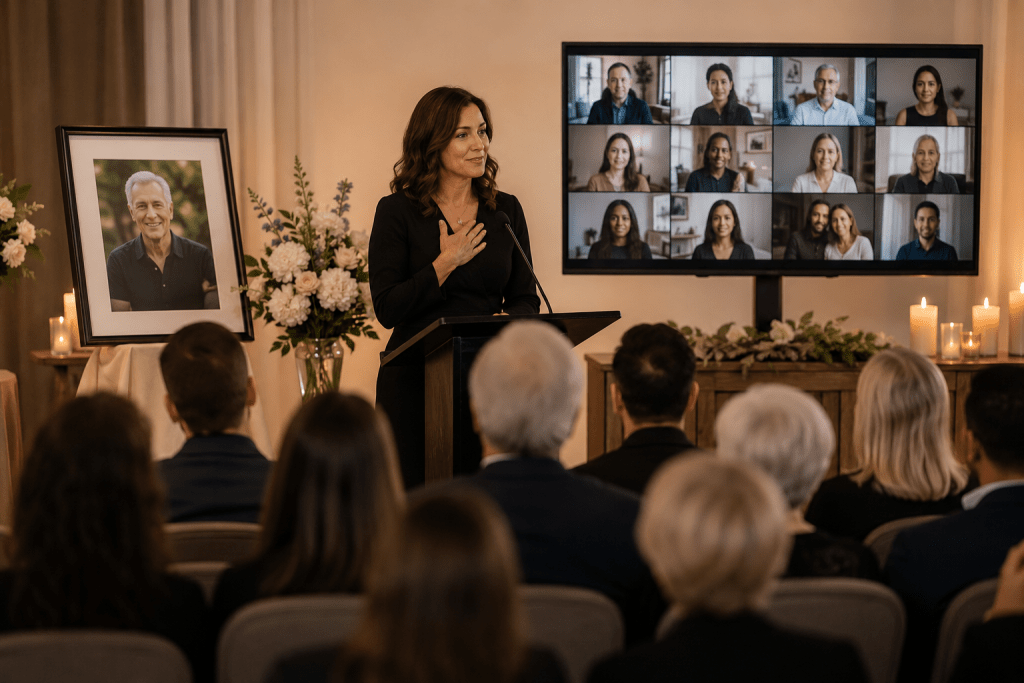 Hybrid Memorial Services
Many families now choose hybrid memorial services that combine an in-person gathering with professional live streaming.
This allows:
- Elderly relatives to attend from home.
- International family members to participate live.
- Friends unable to travel to still feel included.
- Military personnel serving overseas to attend virtually.
- The ceremony to be professionally recorded for future generations.
A celebrant ensures both audiences receive the same thoughtful experience by speaking naturally to guests in the room while welcoming and acknowledging those joining remotely.
How a Funeral Celebrant Adds Value
A celebrant contributes much more than simply delivering a speech.
They bring experience, compassion, organization, and confidence during one of life’s most difficult moments.
Emotional Support
Families gain reassurance knowing an experienced professional is guiding the ceremony with compassion and care.
Professional Structure
Every part of the service is carefully planned so the event flows naturally without awkward pauses or uncertainty.
Personalization
Every ceremony reflects the personality, interests, values, and accomplishments of the individual being remembered.
Reduced Stress
The family is free to spend time with one another instead of worrying about schedules, introductions, or logistics.
A Better Experience for Guests
Guests leave with a deeper understanding of the person’s life, often learning stories and memories they had never heard before.
Technology Coordination
For virtual and hybrid memorials, celebrants work alongside live-streaming professionals to coordinate speakers, slideshows, videos, music, and online participants.
Funeral Celebrant Selection Checklist
Before hiring a celebrant, consider asking the following questions.
Experience
☐ How many memorial services have they conducted?
☐ Do they specialize in celebrations of life?
☐ Are they experienced speaking before large groups?
☐ Have they worked with families from different backgrounds?
Personalization
☐ Will they spend time interviewing our family?
☐ Will they write a completely customized ceremony?
☐ Will they incorporate our stories and memories?
☐ Can they include cultural traditions or special requests?
Virtual Experience
☐ Have they conducted virtual memorial services?
☐ Can they coordinate with professional live-streaming providers?
☐ Are they comfortable engaging both online and in-person guests?
☐ Can they integrate video tributes and multimedia presentations?
Flexibility
☐ Can they conduct religious, spiritual, secular, or blended ceremonies?
☐ Are they comfortable with outdoor venues?
☐ Can they coordinate multiple speakers?
☐ Will they adapt to our family’s wishes?
Communication
☐ Are they compassionate?
☐ Do they listen carefully?
☐ Are they responsive?
☐ Do they explain the planning process clearly?
Technical Coordination
☐ Will they coordinate with the funeral home?
☐ Can they work with musicians?
☐ Will they collaborate with videographers and live-streaming teams?
☐ Do they participate in rehearsals if needed?
Frequently Asked Questions
Does Virtual Memorial Gatherings offer the services of a celebrant?
Yes, Virtual Memorial Gatherings offers the services of celebrants for in-person, virtual and hybrid gatherings. See more information here.
What is the difference between a funeral celebrant and an officiant?
An officiant generally represents a particular religious organization or denomination and conducts ceremonies according to that tradition.
A funeral celebrant focuses on creating a highly personalized ceremony that reflects the life, values, personality, and wishes of the individual and their family.
Can a funeral celebrant include religious elements?
Absolutely.
Many celebrants incorporate scripture, prayers, hymns, blessings, or faith-based readings whenever requested by the family.
Can a celebrant conduct a completely non-religious celebration of life?
Yes.
Many celebrants specialize in secular and humanist ceremonies that focus entirely on the person’s life story, relationships, accomplishments, and legacy.
Can a celebrant lead a virtual memorial service?
Yes.
Professional celebrants regularly conduct fully virtual memorial gatherings as well as hybrid services where some guests attend in person while others participate online from anywhere in the world.
Do celebrants help write eulogies?
Many do.
Some prepare the primary tribute themselves, while others coach family members who wish to deliver a personal eulogy.
Can a celebrant coordinate with the funeral home?
Yes.
Celebrants frequently work with funeral directors, musicians, videographers, photographers, live-streaming technicians, florists, and event coordinators to ensure the ceremony proceeds smoothly.
Is a celebrant only for funerals?
No.
Celebrants also lead:
- Celebration of life ceremonies
- Memorial services
- Graveside services
- Ash scattering ceremonies
- Burial at sea ceremonies
- Anniversary remembrance events
- Dedication ceremonies
Final Thoughts
Every life has a unique story, and every farewell should reflect that story with dignity, compassion, and authenticity.
Whether you choose a traditional funeral, a celebration of life, a virtual memorial gathering, or a hybrid ceremony that connects loved ones around the world, a professional funeral celebrant helps create an experience that honours your loved one while bringing comfort to everyone who attends.
With thoughtful planning, compassionate guidance, and seamless coordination, a celebrant transforms a memorial service into a lasting tribute that celebrates not only how someone died—but how they truly lived.
We’re here to help you plan a funeral, virtual memorial or facilitate a live streaming option.
We’ll guide you through the options.
We’ll answer your questions.
We’ll make suggestions based on your expectations.
We’ll never pressure you. Be comfortable in the decisions you make.
